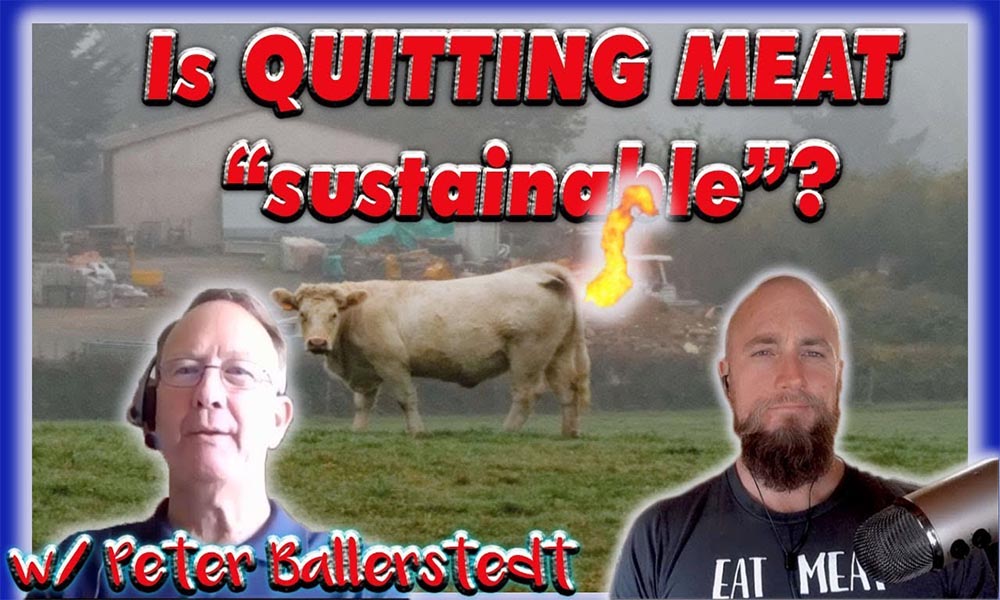
Meat “Sustainability” Myths with Peter Ballerstedt
As an Amazon Associate, I earn from qualifying purchases.
In this episode, Peter challenges popular assumptions about sustainability and explains why many of the loudest arguments against meat ignore basic agricultural science. He also highlights how ruminants use land humans can’t farm, how they convert non-edible plants into high-value protein, and why chronic disease should be part of any honest sustainability conversation.
You’ve probably heard the claims. Beef is destroying the planet, cows are draining resources, and a “sustainable future” means replacing animal foods with lab products or fortified powders. Ruminant animals are not the villains they’re made out to be, and the people repeating these talking points often rely on recycled claims that don’t hold up under scrutiny.
The discussion opens up a bigger point. Sustainability cannot be defined by marketing campaigns or single-issue metrics. It has to include soil health, food security, cultural needs, and human nutrition.
Jump To:
Listen to the Episode Now
Click play on the podcast player below or watch the video on Youtube.
Meet the Guest
Peter Ballerstedt is a leading voice in forage agronomy and ruminant agriculture. His work focuses on grazing systems, soil health, and the role of ruminants in sustainable food production. He is known for bridging the gap between the agricultural world and the metabolic health community, helping people see how nutrition, food systems, and land management interact.
Connect with Peter on Facebook, X, YouTube, and Instagram to follow his talks and ongoing work in forage agronomy.
Episode Highlights
Peter explains why terms like “sustainable” and “regenerative” are often used without clear definitions, creating confusion instead of clarity. He walks through what sustainability actually means for livestock producers, including how ruminants function in natural carbon cycles, how methane is misrepresented, and why beef production looks very different from the way activists describe it.
Tristan and Peter also dig into the role of metabolic health in this debate. Chronic disease has enormous environmental and economic costs, yet it’s rarely mentioned when people criticize meat. They explore how animal foods provide essential nutrients that plant-based diets struggle to supply, especially for children, pregnant women, and aging adults. If a population becomes sicker while eating less animal food, can that outcome be called sustainable?
In this episode:
- How global food security depends on ruminant livestock far more than critics claim
- Why sustainability claims fall apart when you look closely at agricultural systems
- How ruminants convert non-edible plants into nutrient-dense food humans rely on
- Why methane cycles from cattle are not equivalent to fossil fuel emissions
- What people misunderstand about grass-fed vs grain-finished systems
- How chronic disease changes the sustainability conversation
- Why animal foods remain essential for human health across cultures and life stages

Please subscribe and give a 5-star rating on your preferred podcast platform!



Meet Our Sponsor
This episode is brought to you by CHOQ. Choq is our first choice for natural supplements to positively impact energy, mood, and stress resilience throughout the day. Shop now and use our code BIG53LIFE for 53% off all subscriptions for life!

Disclaimer: These statements have not been evaluated by the Food and Drug Administration. The contents of this podcast are for informational purposes only and do not constitute medical advice. The content presented here is not intended to be a substitute for professional medical advice, diagnosis or treatment. Always seek the advice of a qualified healthcare provider with any questions you may have regarding a medical condition or dietary changes. Reliance on any information provided by this article is solely at your own risk.